Customizable Template Library
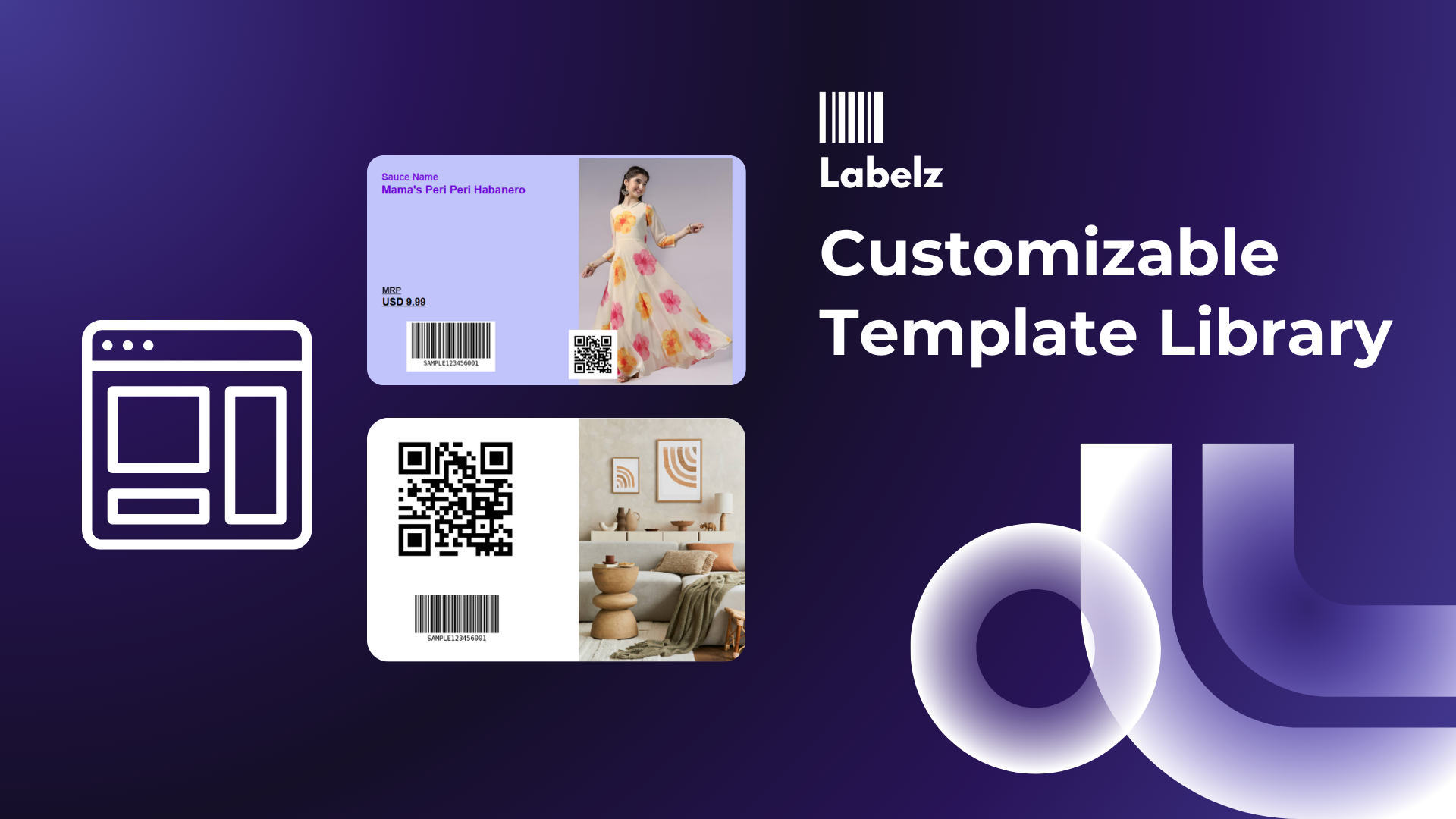
A Customizable Template Library is a repository of pre-built, reusable label designs—covering everything from SKU and carton labels to bin markers and return slips.
Customizable Template Library
What it is
A Customizable Template Library is a repository of pre-built, reusable label designs—covering everything from SKU and carton labels to bin markers and return slips.
Instead of forcing users to design from scratch, the system provides 100+ industry-standard templates that can be instantly adapted to your specific business use case, ensuring you start with a layout that is already print-ready.
Why it matters
Moving to a library-based approach offers immediate operational benefits:
- Faster Onboarding: New vendors or warehouses can start printing in minutes by selecting a standard template, rather than spending days on design approvals.
- Consistency Across Teams: Ensure that the warehouse in Mumbai prints the exact same layout as the warehouse in Delhi.
- Reduced Design Dependency: Operations teams can self-serve for common needs without waiting for a graphic designer to build a basic shipping label.
How it works (Recommended Structure)
A well-organized library should be categorized to help users find the right starting point quickly:
By Function
Group templates by their operational role: Product Tags, Inventory/Bin Labels, Shipping Manifests, Compliance Stickers, and Return Slips.
By Label Size
Organize by physical dimensions to match stock: 50×25mm (Jewelry), 100×50mm (Carton), 100×150mm (Shipping), or A4 Sheets.
By Industry
Curate collections for specific verticals: Apparel Tags (Size/Color focus), FMCG Shelf Labels (MRP/Expiry focus), or Cosmetics (Ingredients focus).
The Template "Contract"
Every template in the library must adhere to a strict definition to be useful. We call this the "Contract":
- Variable Definitions Clearly list which data points are Required (e.g., SKU, Barcode Value) versus Optional (e.g., Batch Number, Mfg Date, MRP).
- Printer Compatibility Explicit notes on hardware requirements. Does this template require a 300 DPI printer? Is it thermal transfer or direct thermal?
- Visual Proofs Include preview screenshots and a version history log so users know exactly what the output will look like before they select it.
Governance (Critical Documentation)
To prevent the library from becoming cluttered or outdated, strict governance is required:
- 🔐 Creation vs. Publishing: Anyone can draft a template, but only specific "Librarians" or Admins should have the right to Publish it to the global library.
- 🔄 Rollout Strategy: Document how changes happen. When moving from v1 to v2, does it auto-update for everyone, or do users manually opt-in?
- ⚠️ Deprecation Policy: clear rules for retiring legacy templates. Ensure old templates are archived, not just deleted, to maintain print logs history.